Cloud software vs on-premise tools in india: what works better for businesses?
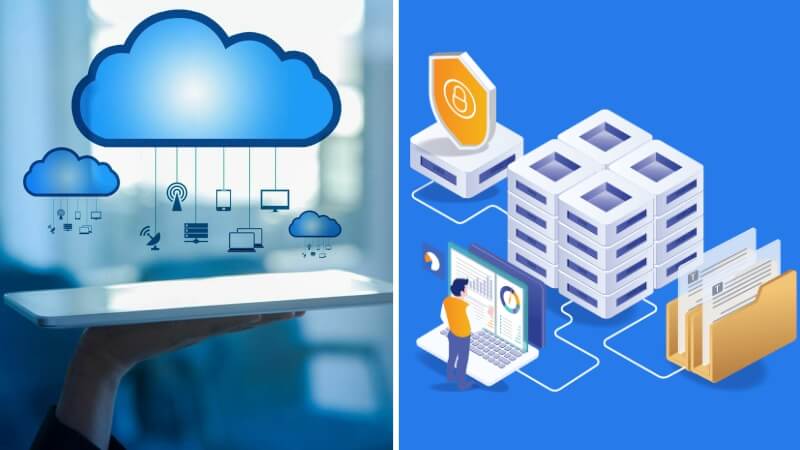
Choosing the right business software in India is no longer a technical decision. It’s a growth decision. Companies today are actively comparing cloud software vs. on-premises tools in India to find what delivers speed, flexibility, and long-term value. And the market is speaking clearly.
Nearly 90% of Indian organizations now use a hybrid Cloud + strategy, which combines cloud and in-house information technology systems.
So what truly works better in India today?
Let’s break it down simply.
Understanding Cloud, On-Premise, and Hybrid Software
Before choosing the right system, it helps to know what each option really means.
Cloud Software (SaaS)
Cloud software runs on the internet. You access it through a browser or app without any installation of heavy systems. The provider will take care of updating, security, and storing. You just log in and use it; this is why cloud platforms are fast, flexible, and easy to scale.
On-Premise Software
On-premise tools are installed directly on your own company's servers and computers. Your IT team manages everything: hardware, updates, backups, and security. This gives you complete control but requires higher investment and maintenance.
Hybrid Software Model
A hybrid combines both. The sensitive data will be maintained on the local server, while the day-to-day functioning will be hosted on the cloud platform. This will provide better security to businesses along with cloud hosting, making it more popular for businesses in India.
Understanding the basics is just the start; the real value comes from comparing how each model performs in cost, scalability, and real-world business use.
Core Features of Cloud Software (SaaS)
The latest cloud-based business software in India is entirely online and can be accessed via a browser or a mobile application.
Key features include:
- Subscription-based pricing
- Automatic updates and backups
- Remote access from anywhere
- Built-in security layers
- Easy scalability
- Quick integration with other tools
Such characteristics are causing massive cloud software adoption in India, especially in the domain of start-ups and MSMEs.
Cloud Software in India - Pros vs Cons Comparison
| Pros of Cloud Software | Cons of Cloud Software |
|---|---|
| Low upfront costs, with fixed amounts spent every month | Depends on stable internet connectivity |
| Fast deployment in days or weeks | Ongoing subscription expenses |
| Easy scalability during periods of business growth or peaks in demand | Limited infrastructure capacity |
| Ideal for remote and multi-city teams | Partial data control with the service provider |
| Minimal IT maintenance required | Downtime is possibly experienced during a network or server failure. |
| Access to advanced AI and automation tools | Security issues in highly regulated sectors |
Cloud-based software provides speed, flexibility, and cost-effectiveness, which is profitable for most Indian businesses in their era of growth. However, connectivity dependence and compliance needs should be carefully considered.
This balanced picture describes SaaS benefits in India as well as the persisting cloud software security concerns in India at a glance.
Core Features of On-Premise Tools
On-premises software for Indian businesses is installed on local servers and managed internally.
Key features include:
- Full Control over the Systems & Data
- The work can be done without
- Custom hardware configurations
- Internal security management
- One-time license investments
- Local performance optimization
This remains an important factor in all industries where control is a necessity.
On-Premise Software in India - Pros vs Cons Comparison
| Pros of On-Premise Software | Cons of On-Premise Software |
|---|---|
| Complete data ownership and control | High initial hardware and setup costs |
| Strong compliance for regulated industries | Long implementation and test cycles |
| High customization and infrastructure flexibility | Difficult and costly scaling of the system |
| Stable performance with low latency | Requires dedicated IT staff |
| Cost-efficient for fixed long-term workloads | Slower access to new technologies |
On-premise software is still the most suitable option for the Indian industry sector due to the emphasis on control, compliance, and performance. However, the expensive nature of on-premise software, coupled with the inability to scale the business make this option less preferred.
Hybrid Software Model - A Balanced Approach
Today, there are many enterprises that make use of both systems. This is where the concept of cloud ERP vs on premise ERP India comes into the picture.
Hybrid systems typically include:
- Sensitive data stored locally
- Cloud tools for collaboration, analytics, and automation
- Flexible cost structures
Hybrid Software Model in India - Pros vs Cons Comparison
| Pros of Hybrid Model | Cons of Hybrid Model |
|---|---|
| Better regulatory and data localization compliance | More complex system integration |
| Strong security with cloud flexibility | Requires careful technical planning |
| Optimized infrastructure and operating costs | Needs skilled IT management |
| Sensitive information remains on local servers | More setup effort compared to pure cloud. |
| Scalable cloud technologies for daily operations | Monitoring in two environments |
Hybrid software provides the very best of both worlds, cloud scalability combined with on-premise control. It is becoming the chosen option for many regulated and enterprise Indian businesses.
Which Model Fits Your Business Best?
Choosing the right software model depends on how your business operates, grows, and handles data.
Cloud-First Works Best For
- Startups that want to scale fast
- SaaS companies that have digital-first operations
- Ecommerce brands dealing with traffic spikes
- Service-oriented businesses that require swift deployment
- Remote and multi-city teams
This is why the best cloud software solutions for Indian startups are almost always SaaS-based.
On-Premise Works Best For
- Banking and financial institutions
- Manufacturing plants with heavy infrastructure
- Pharmaceutical companies handling sensitive data
- Government sectors with strict compliance needs
Hybrid Fits Best For
- Large businesses with complex operations
- Regulated industries balancing security and flexibility
- Multi-location businesses needing centralized control
Final Verdict
So, is cloud software better than on premise in India? The simple answer is, for most fast-growing businesses, yes. This is because cloud-based platforms offer rapid deployment, low total cost, and scalability, making cloud software adoption in India continue to rise.
However, on premise software for Indian businesses remains critical in industries like banking, pharmaceuticals, and manufacturing, which require strict compliance, reduced latency, as well as total control over the data itself.
For many companies, the solution is hybrid. By combining the security of on-premises solutions with the flexibility of the cloud, hybrid approaches can be the key to maximum efficiency - and the future of business technology in India.
In short: Choose cloud for agility and scale, on-premise for control, and hybrid for the best of both worlds.